

Grow Guide
How to clone weed, in short: cut a 4 to 6 inch branch tip from a healthy female plant in the vegetative stage, dip the cut end in rooting hormone, and set it in a moist cube or an aeroponic cloner. Keep it warm, humid and under gentle light, and roots appear in 7 to 14 days.
A clone is a genetic copy of the plant it came from, so cloning is how growers keep a strain they love without buying seeds again. This chapter of the grow guide covers taking cuttings, the two rooting methods that work, the environment cuttings need, and how to keep a mother plant.
What is cloning weed plants?
Cloning weed plants means rooting a cutting so it grows into a new plant with the exact genetics of its parent. A clone from a female is always female, it finishes on the same schedule as its mother, and it shares her smell, potency and structure. Growers clone to save a keeper, fill a room fast, or skip seed germination.
Seeds, even feminized ones, carry variation, and regular seeds give you males to find and pull (the male vs female chapter covers how). A room full of clones is a room of identical plants that need the same feed, the same light height and the same harvest day. That uniformity is what makes methods like the sea of green possible.
How to clone weed: taking the cutting
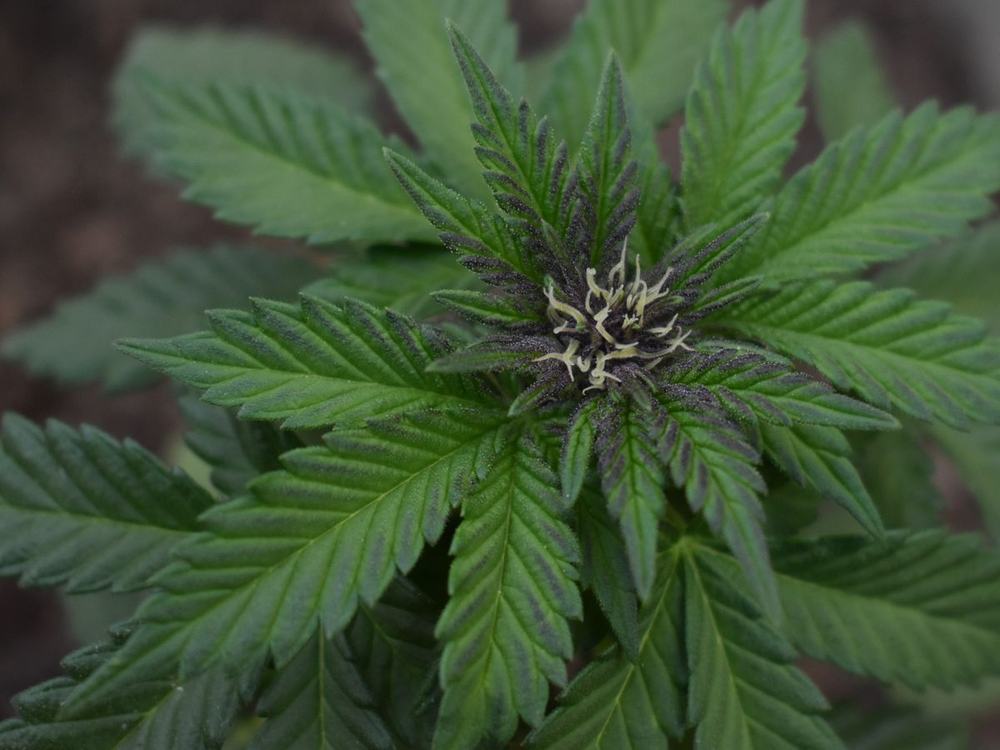
To clone weed, you start by taking cuttings from a plant that has been in vegetative growth for at least four weeks and is healthy, green and well watered. Water the mother the day before. Cuttings from a flowering plant will root, but slowly, and they spend weeks turning back to leafy growth before they act normal.
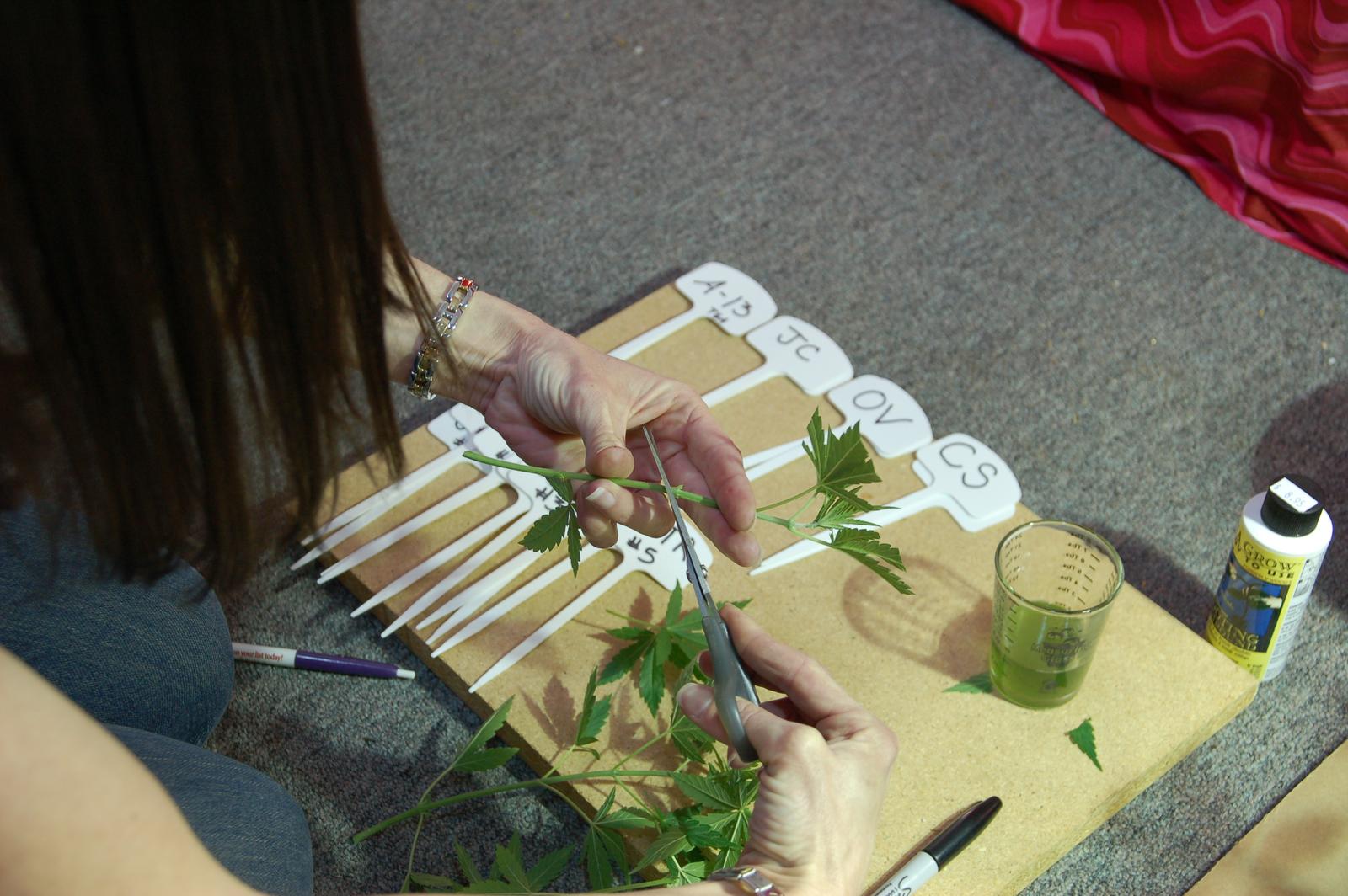
- Sterilize a razor blade or sharp scissors with rubbing alcohol. Dull blades crush the stem.
- Pick a branch tip with two or three nodes, 4 to 6 inches long.
- Cut at a 45 degree angle just below a node. The angle gives the stem more surface for roots.
- Drop the cutting straight into a cup of clean water so no air enters the stem.
- Strip the leaves from the bottom node. Trim the tips of big fan leaves so they do not touch the dome or each other.
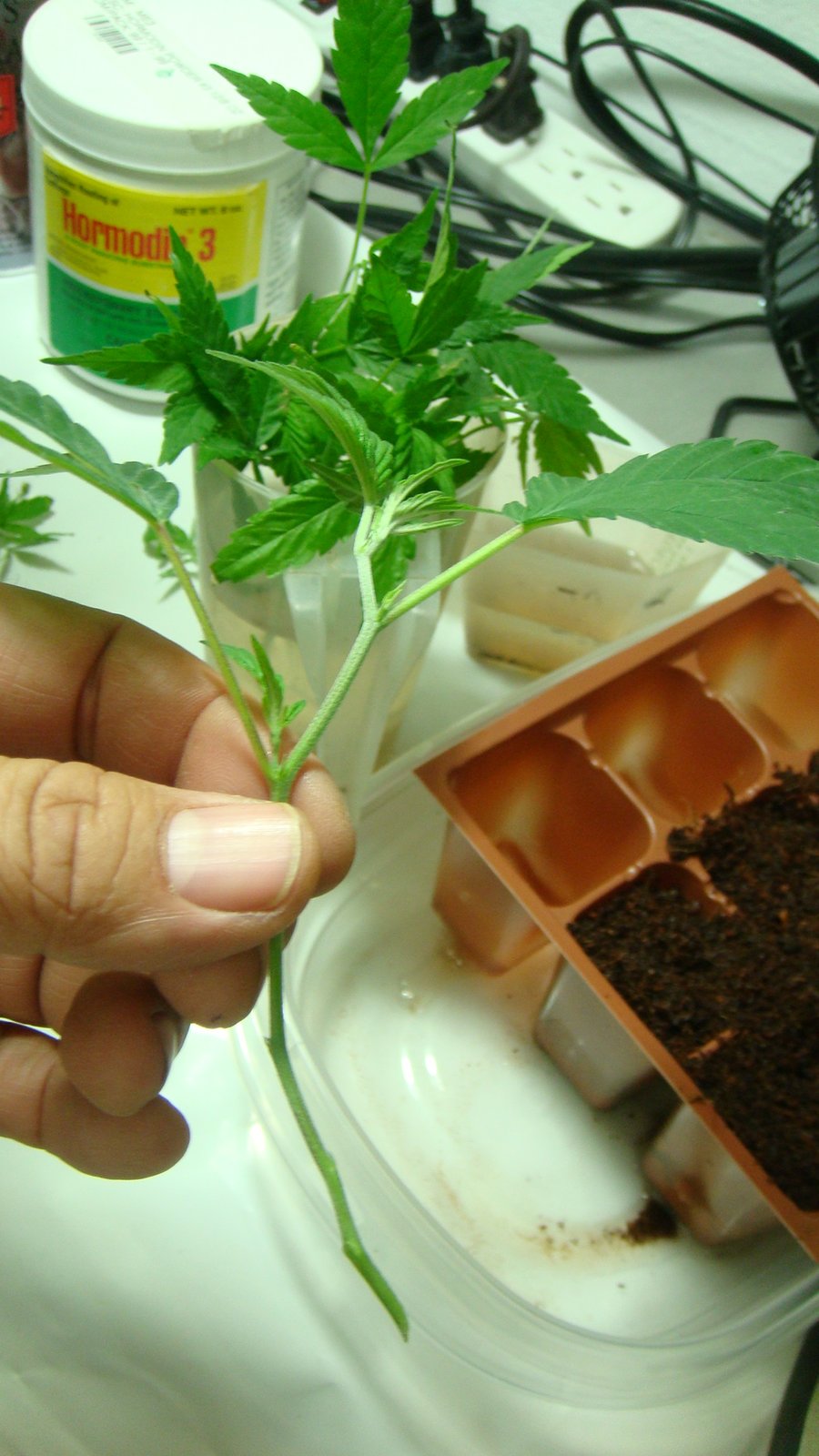
- Dip the cut end in rooting gel or powder and set it into the medium.
Work fast, out of the sun.
Rooting hormone and the right medium
Rooting hormone and the right medium both speed up rooting, and with hormone, more is not better. Most gels and powders use indole-3-butyric acid (IBA). A 2022 HortTechnology study on hemp cuttings found 89% rooting with no hormone and with a 3000 ppm talc powder, but only 79% at 8000 ppm, so a mild product does the job.
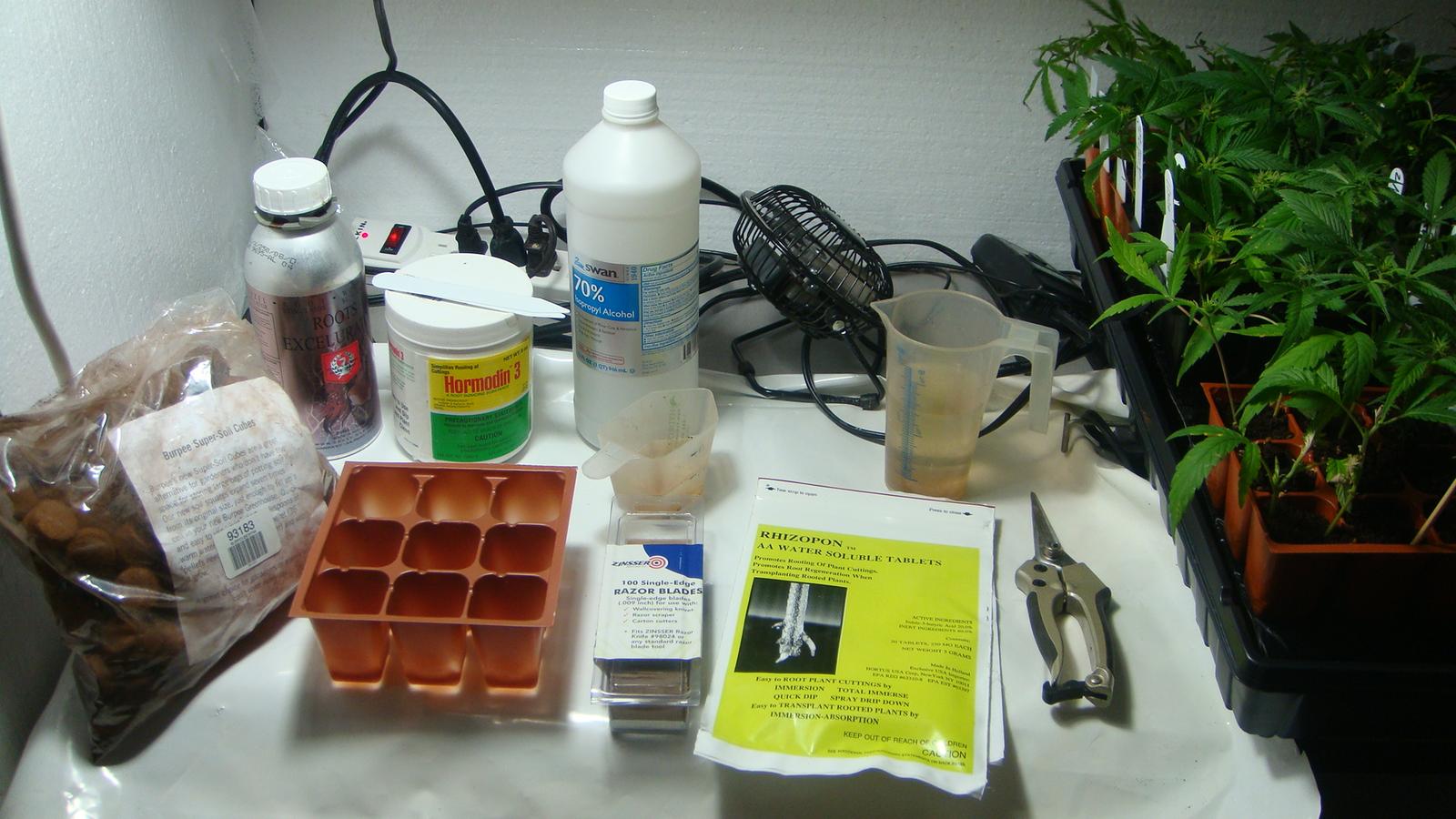
For a medium, rockwool cubes, peat plugs and Rapid Rooters all work. Rockwool needs a soak in water at pH 5.5 first; plugs do not. Squeeze cubes so they are damp, not dripping. A soggy cube suffocates the stem before roots can form.
What is a cloner?
A cloner is a box that roots cuttings without any growing medium. In an aeroponic cloner, cuttings sit in foam collars in the lid with their stems hanging into the box, while a pump sprays a fine mist of water over them around the clock. The stems get constant moisture and plenty of oxygen, which is what new roots need.
Aeroponic cloner vs cubes
An aeroponic cloner usually roots faster, often in 7 to 10 days, and you can see the roots coming, so there is no guessing. The costs are a pump that can fail, water that must stay between 68 and 75F, and a reservoir to change weekly. Warm, stale water breeds root rot fast. If you already run a hydroponic system, a cloner will feel familiar.
Cubes under a dome are cheaper and more forgiving of a power cut, and the rooted clone goes into its next pot without its roots being touched. Use plain water in a cloner and plain water in cubes for the first week; a cutting has no roots to take up fertilizer.
Rooting methods compared (typical home grow at 72 to 78F)
| Method | Typical days to roots | Upkeep | Best for |
|---|---|---|---|
| Aeroponic cloner | 7 to 10 | Change water weekly, watch water temperature | Growers taking 10 or more cuttings regularly |
| Rockwool cube under a dome | 10 to 14 | pH 5.5 presoak, keep damp | Hydro and coco growers |
| Peat plug or Rapid Rooter | 10 to 14 | Keep damp | Soil growers, small batches |
| Straight into soil | 14 to 21 | Mist often | Growers with no other gear |
| Glass of water | 10 to 21 | Change water every 2 days | A single cutting, as a last resort |
Humidity, temperature and light for clones
Clones need high humidity, gentle warmth and soft light. Hold humidity around 75 to 85% for the first 4 or 5 days, then crack the dome vents a little more each day until the cuttings stand on their own. The study above found a humidity dome and an intermittent mist system gave about the same rooting rate (88% vs 84%), so a $10 dome is enough. If you track vapor pressure deficit, aim low for cuttings.
Keep the air and root zone at 72 to 78F; a heat mat under the tray helps in a cold room. Give 18 hours of light a day, but at low intensity: a small LED or fluorescent fixture well above the dome. A cutting under a full-power flowering light wilts and stalls.
The mistake most growers make with clones
The mistake most growers make with clones is fussing over them. They open the dome every hour, water cubes that are already wet, feed nutrients on day two, and blast the tray with a big light. Without roots, a cutting cannot use any of that. Rot at the stem base and limp, yellow leaves follow.
Set the conditions, then leave them alone. Check once a day, mist if leaves look dry, and look for white root tips at the bottom of the cube before you change anything. In eighteen years of Dear Danko letters, dead clones nearly always came from too much care, not too little.
Keeping a mother plant
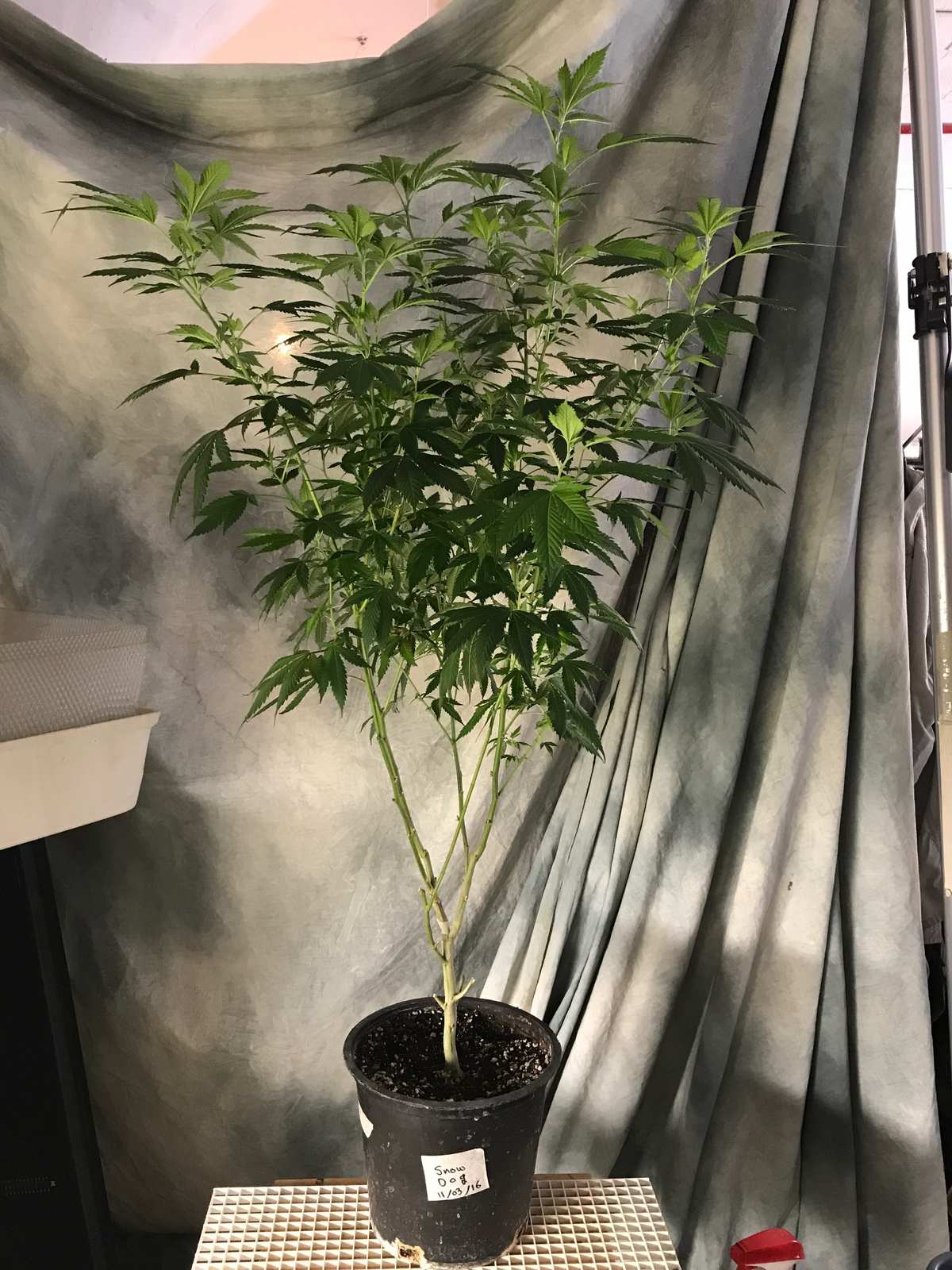
A mother plant is a female you keep in vegetative growth on an 18 hour light schedule so she never flowers and you can take cuttings from her for months. Pick your best plant as the mother. Feed her lightly and let her recover between big cutting sessions. When she gets woody and slow, root a cutting from her and raise that as the new mother.
Next step: growing on your rooted clones
Growing on your rooted clones starts once roots poke out of the cube or reach an inch long in the cloner, move each clone to a small pot, and your next step is the stages of growth chapter, which picks the plant up in early vegetative growth. Cultivation is for adults where it is legal; check your local law before you take cuttings.
Sources
- HortTechnology (2022): Impact of Indole-3-butyric Acid Concentration and Formulation and Propagation Environment on Rooting Success of 'I3' Hemp by Stem Cuttings (humidity dome vs mist rooting rates (88% vs 84%), and 8000 ppm IBA cutting rooting to 79% while 0 and 3000 ppm both reached 89%)